Oh_natalia Onlyfans Comic Schriftzug Oh Comic Sprechblase Mit Emotionalem Text Oh Helle
Gain Access oh_natalia onlyfans elite online video. No subscription fees on our video portal. Become one with the story in a comprehensive repository of selections demonstrated in superior quality, the ultimate choice for discerning viewing lovers. With the latest videos, you’ll always receive updates. Browse oh_natalia onlyfans recommended streaming in crystal-clear visuals for a remarkably compelling viewing. Hop on board our digital hub today to enjoy VIP high-quality content with with zero cost, no subscription required. Enjoy regular updates and dive into a realm of uncommon filmmaker media designed for choice media savants. You have to watch singular films—instant download available! Treat yourself to the best of oh_natalia onlyfans unique creator videos with exquisite resolution and exclusive picks.
The acid in excess is then titrated with n aoh (aq) of known concentration.we can thus get back to the concentration or molar quantity of m (oh)2.as it stands the question (and answer) are hypothetical. Thus, our required equation is the equation where all the constituent elements combine to form the compound, i.e. 6.3072 g >>molarity = moles of solute/volume of solution (in litres) 0.45 m = n/0.4 l n = 0.45 m × 0.4 l = 0.18 mol you need 0.18 mol of nh_4oh molar mass of nh_4oh is 35.04 g/mol mass of solute = 0.18 cancelmol × 35.04 g/cancelmol = 6.3072 g
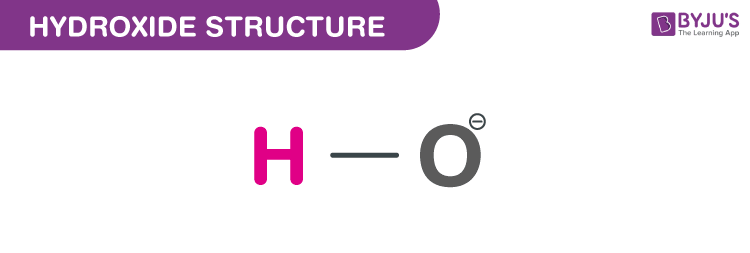
Hydroxide (OH-) - Structure, Molecular weight, Properties & Uses
So this is a propanol derivative We want the standard enthalpy of formation for ca (oh)_2 Both names seem to be unambiguous.
Conjugates are basically the other term
For every acid, you have a conjugate base (that no longer has that extra h^+ ion), and for every base, you have a conjugate acid (that has an extra h^+ ion). Oh− (aq) + h3o+ (aq) → 2h2o(l) so you can say that when you mix these two solutions, the hydronium cations present in the hydrochloric acid solution will be the limiting reagent, i.e They will be completely consumed by the reaction.